Making a statement: Exercise 2 Answers
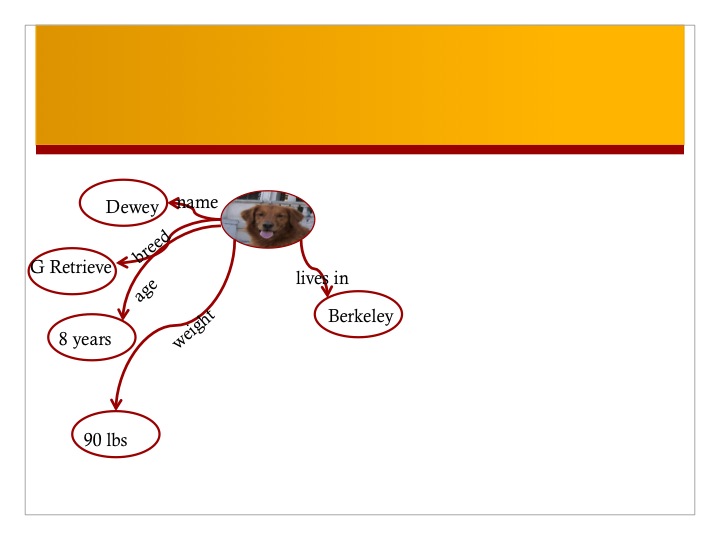
First, we have the statement that "Dewey lives in Berkeley." This shouldn't present problems. We've moved the original graph over to the left so we have room to add this new statement. Note that one of the great advantages of this data format is that new information can be added at any time without disturbing the data that is already present.
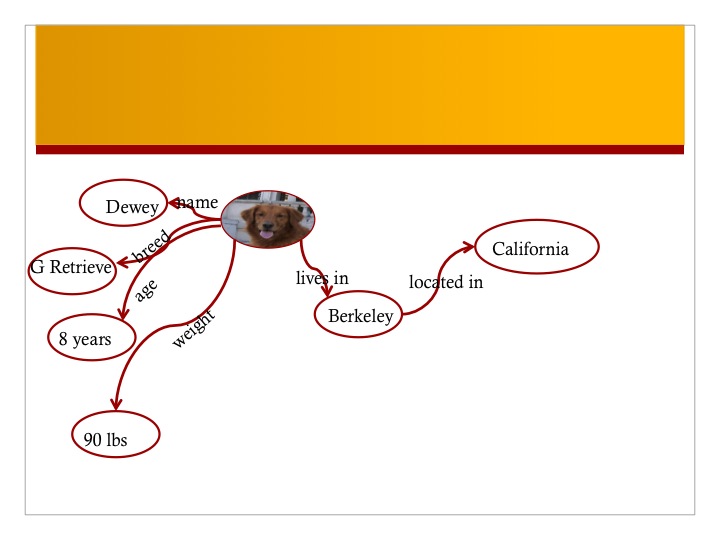
The next statement is a little tricky. It says that "Berkeley is in California." We no longer have Dewey as a subject; the subject of our statement is now Berkeley. We already have Berkeley in our graph as the object of the statement that "Dewey lives in Berkeley." We can use that same identity as the subject of our new statement.
The next statement is even trickier, but it also demonstrates some of the power of linking our information in this way. We now have that "The University of California is in Berkeley." The University is the subject, and Berkeley is the object. So Berkeley has been the object of "Dewey lives in Berkeley" the subject of "Berkeley is in California" and now is the object of "The University of California is in Berkeley."
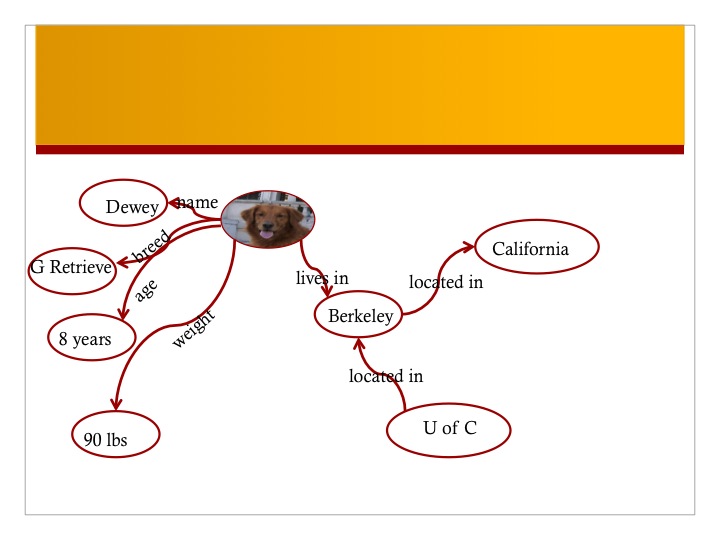
We don't have a statement that the University of California is in California, but we have that information by following the linking from the University's link to Berkeley and then to Berkeley's link to California. Links can allow you to make inferences about information. Every bit of data added to a linked data graph has the potential to increase the actual amount of information that you have available.
